Generative Manufacturing
GENERATIVE MANUFACTURING
Crafting the Future
Generative Manufacturing connects code-based design with industrial production. In generative design, a work emerges from an algorithmic rule system defined by the artist. A single system can produce any number of distinct variations, each unique yet part of the same design logic. When these variations are translated directly into production data, each can become an individual physical product. Generative Manufacturing thus combines artistic variability with industrial production and lays the groundwork for the serial production of unique pieces.
From Vision to Reality
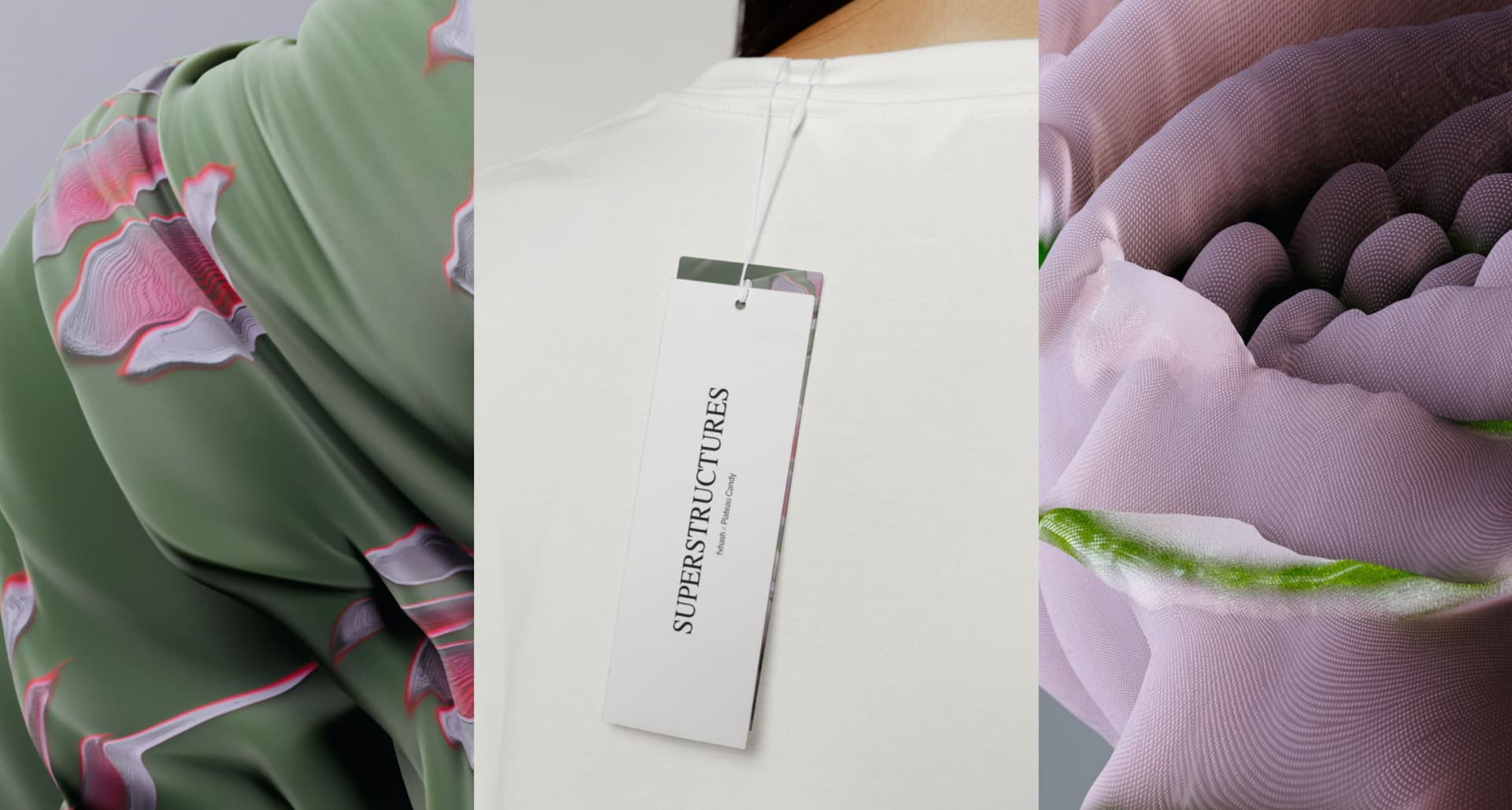
SUPERSTRUCTURES began in 2024 as a collaboration with fxhash, exploring the intersection of generative art, digital edition models and physical products. From these early Web3 approaches emerged a more concrete question: How can the logic of a code-based artwork be connected directly to industrial manufacturing?
This has since become the project's central focus. The first project to emerge from this development is now approaching release: a curated edition of high-quality woven contract textiles, developed together with one of the most distinguished specialists in textile manufacturing.
THE PROJECT
From Code to Product
SUPERSTRUCTURES develops processes that translate generative artworks into industrial manufacturing while preserving their underlying logic. Parameters, colours and formal relationships are converted into machine-readable production data. Textiles form the first field of application, with the principle potentially extending to other digitally controlled manufacturing processes.
From 1/1 to 1/1/X
Conventional series production creates many identical products. Mass customization adds a limited degree of individual choice. 1/1/X goes one step further: each object within a series can be a unique expression of the same generative system. SUPERSTRUCTURES explores how this algorithmic variability can be connected to industrial production, allowing many individual pieces to emerge from a shared design logic.
ALLELES by KWAME BUSIA
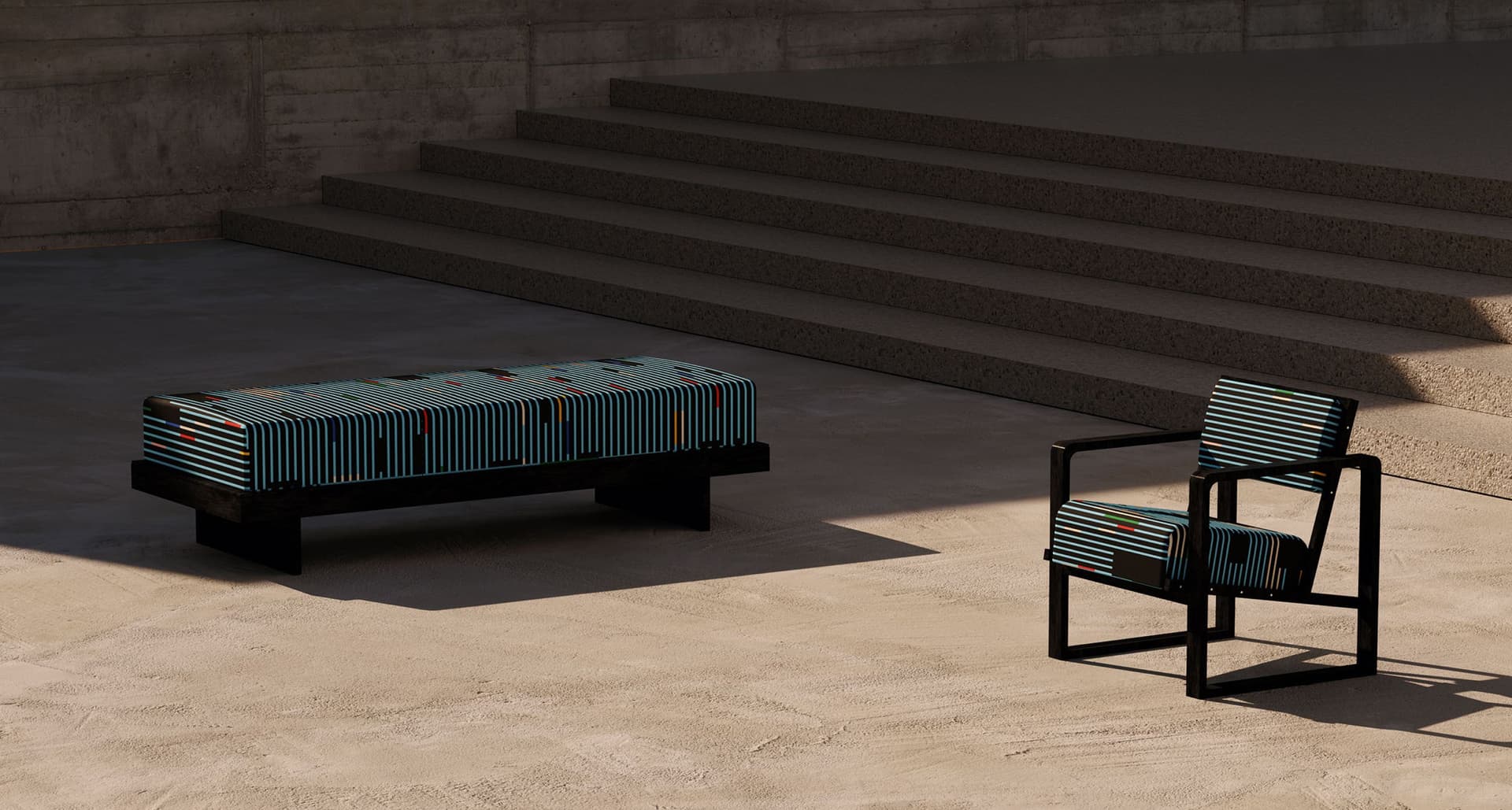
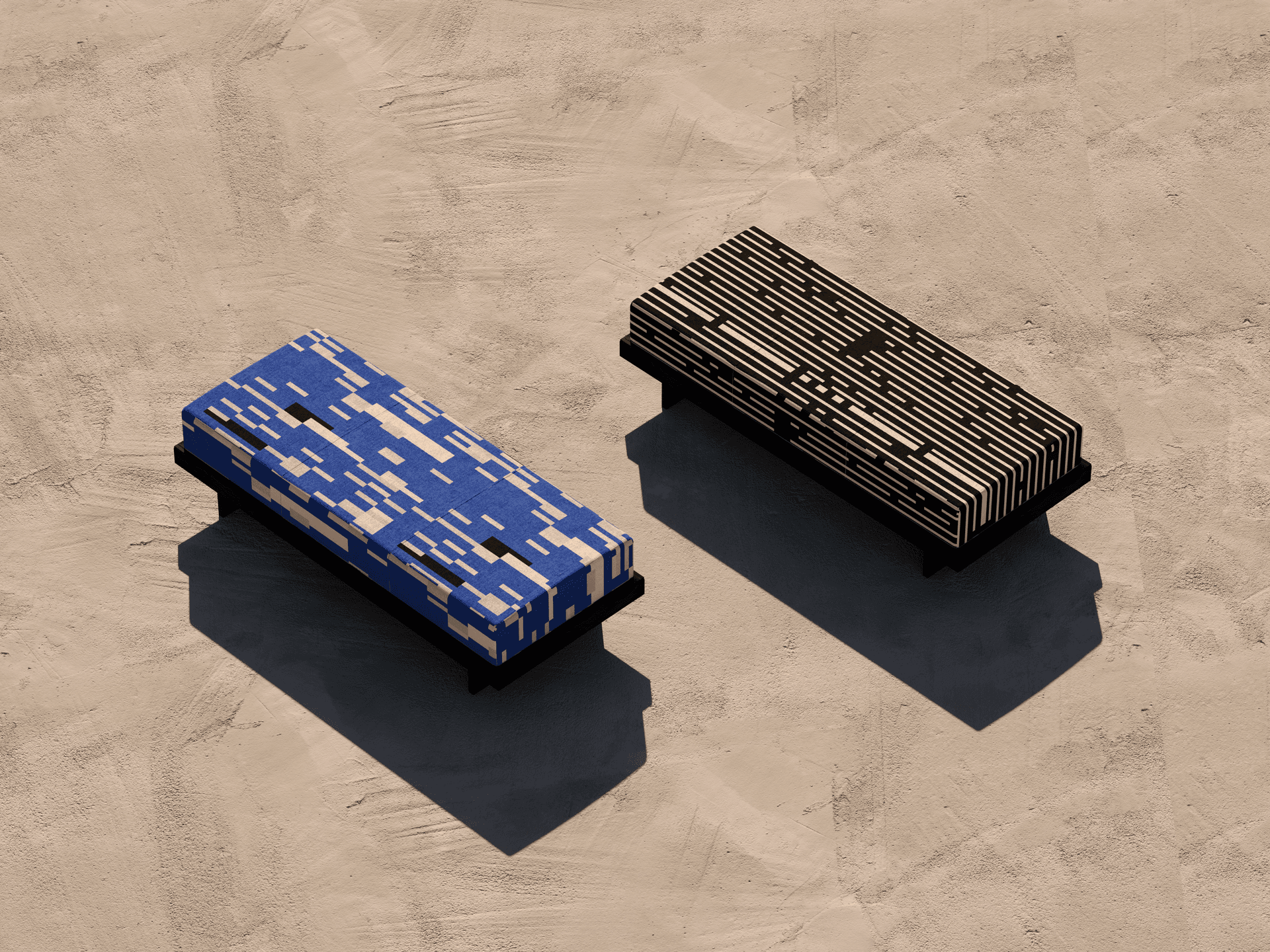
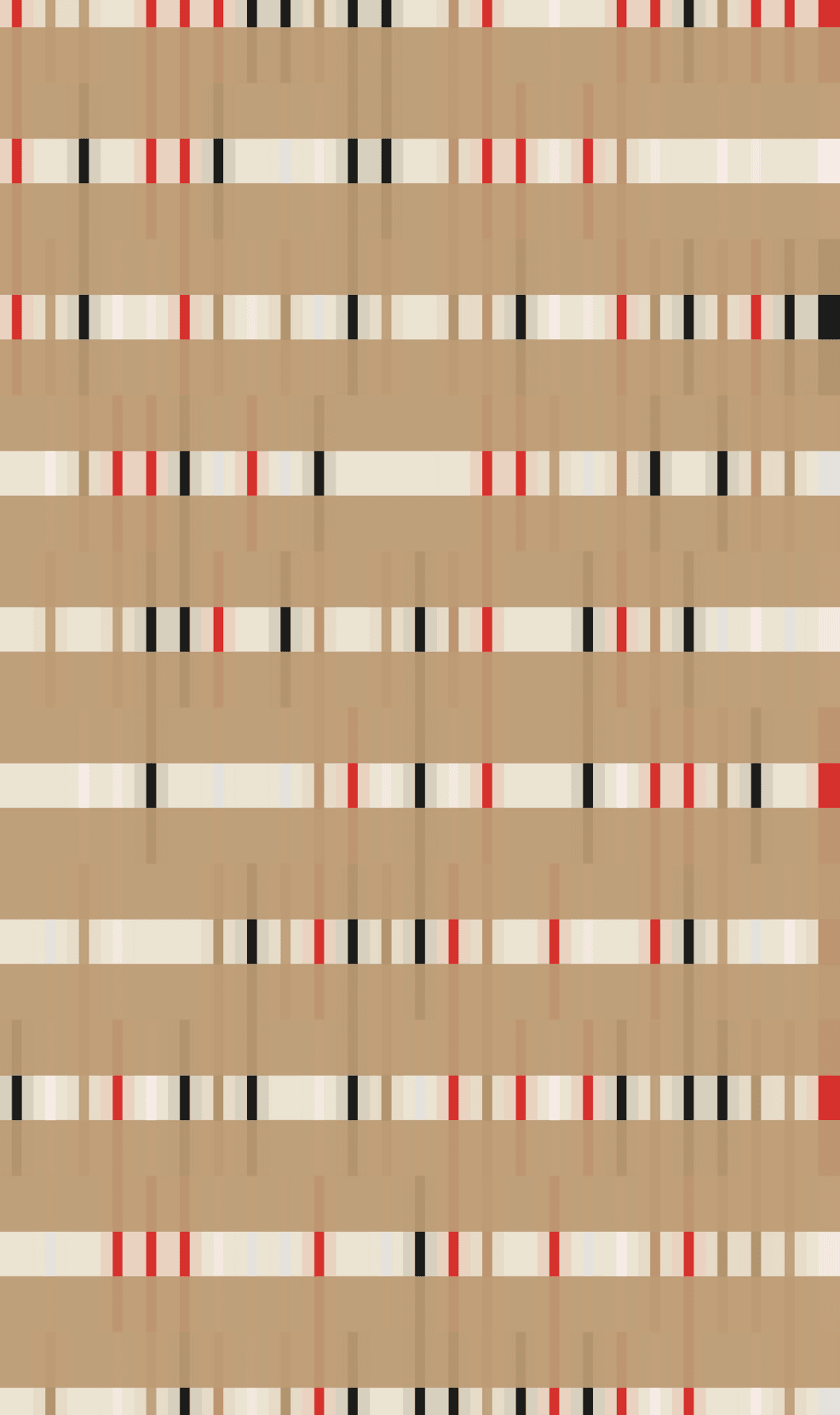
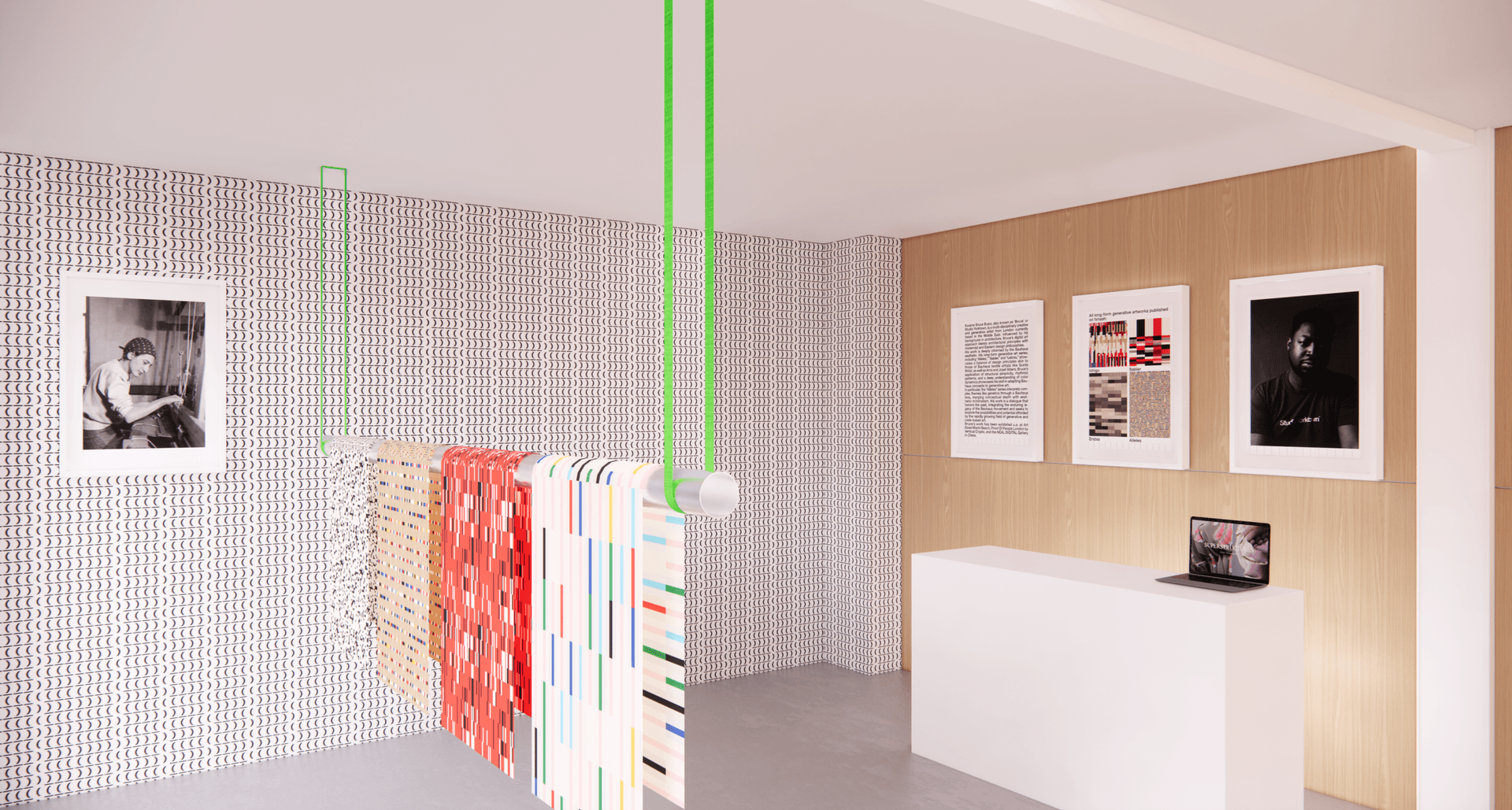
With Alleles, this approach is being realised in industrial weaving for the first time. Kwame Busia's work is based on generative systems he develops himself, with their rules and variations defined in code. For its textile realization, this artistic logic is translated into machine-readable instructions for the weaving process. The same algorithmic foundation thus produces both the visual compositions and their material expression in woven form. A first curated edition of five contract textiles is due to be released shortly.
About the Artist
KWAME BRUCE BUSIA is a multidisciplinary creative and generative artist based in London with a background in architecture. His work combines code-based systems with modernist design and the constructive principles of Bauhaus weaving. In Alleles, Busia explores the relationship between rule and variation: a shared formal structure gives rise to distinct compositions, each with an identity of its own. His work has been shown at venues and exhibitions including Art Basel Miami Beach, Proof Of People London by Vertical Crypto and NEAL DIGITAL Gallery in China.

Contributors
- IDEA, STRATEGY, CONCEPT --Kolja Pitz
- CREATIVE DIRECTION --Dirk König
- FASHION DESIGN --Paula Kühn
- CREATIVE CODING AND WEB DEVELOPMENT --Erik Peralta Løvaas
- LOOM TRANSLATION DEVELOPMENT -- Kolja PitzLink
Contributors
- EXHIBITION DESIGN --Meiré und MeiréLink
- ALLELES ARTWORK --Kwame Busia
- TYP RENDERINGS --Hans von Buelow